
From Wahiba Desert to Muscat: The Omani Locations Behind Badass Ravi Kumar

Some film locations simply provide a setting. Others become part of the visual identity of the film.
For Badass Ravi Kumar, Oman offered the latter.
The Himesh Reshammiya-led action film uses an intentionally heightened visual style inspired by the larger-than-life Hindi cinema of the 1980s. Its story moves between India and Oman, making the country's landscapes and urban environments an important part of its cinematic world.
India Shoots managed and filmed the Oman schedule over 40 days, working across some of the country's most visually distinctive locations.
The Desert as a Cinematic Canvas
The Wahiba Desert immediately brings scale to the screen.
Its vast stretches of sand create an expansive visual environment that can make action, movement and dramatic staging feel larger. For a film that embraces spectacle, this kind of landscape can become an asset in itself.
But the desert was only one part of the production's Omani visual palette.
From Mountains to the Coast
The production also travelled to locations such as Al Hoota Caves in the Al Hamra mountains, where the natural environment offers a very different texture from the open desert.
The coastline introduced another visual dimension.
Qantab Beach, Barr Al Jissah Marina and the Mutrah Corniche brought together water, rocky landscapes, architecture and urban life, allowing the film to shift between contrasting environments.
Meanwhile, Yiti Heights and Al Mouj Marina added further variety to the production.
For a filmmaker, having this level of contrast available within one destination can be invaluable.
Muscat: Urban Character Meets Natural Backdrops
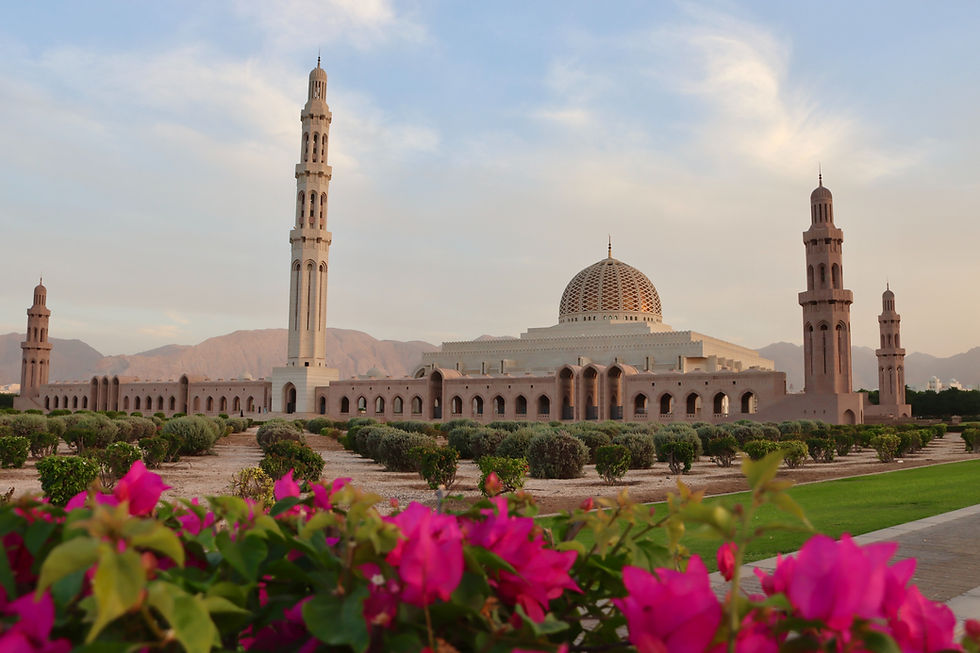
Muscat provides another important component of Oman's cinematic appeal.
The city combines modern infrastructure with distinctive architecture and surrounding natural landscapes. This allows productions to create an urban setting without losing the visual character that makes Oman recognisable.
For Badass Ravi Kumar, this variety helped support a film whose visual world constantly moves between heightened action, dramatic settings and stylised sequences.
When Locations Become Part of the Story
The importance of these locations was also reflected in contemporary coverage of the film.
Bollywood Hungama's review highlighted the film's cinematography and specifically noted how the Oman locations were captured, alongside the production's broader visual and technical elements.
That observation points to something important about international filmmaking: a location's value depends not only on what it looks like in person, but on how effectively it can be translated onto screen.
The right combination of location scouting, cinematography, production design and on-ground coordination can turn a landscape into a cinematic asset.

The Production Behind the Images
Beautiful locations can make a film look effortless. Getting a production to those locations is anything but effortless.
The Oman shoot involved multiple environments across a 40-day schedule. Coordinating movement between desert, mountain, coastal and urban locations required detailed planning and local production expertise.
India Shoots played a key role in managing and filming the Oman portion of the production, helping connect the creative requirements of the film with the practical realities of shooting across the country.
Oman Through the Lens of Indian Cinema
Badass Ravi Kumar ultimately offers a strong example of how Oman can be used to create visual variety within an international production.
From the vastness of Wahiba to the streets of Muscat and the country's dramatic coastline, the film captures several sides of Oman within a single cinematic world.
For filmmakers considering new destinations, the project demonstrates what happens when a country's natural and built environments become more than locations—they become part of the visual language of the film.



Comments